
The Autumn Budget was delivered on 28 October 2026. Headline Income Tax, National Insurance and VAT rates are unchanged, but there are announcements affecting savings, property income, business allowances and employment costs.
Our client newsletter brings together the key measures and dates for individuals and businesses in Deal, Kent and across the South East. Announced measures remain subject to legislation where required; check how they apply to your circumstances before making decisions.
Download the one-page Autumn Budget newsletter (PDF).
Individuals and savings
- Savings income: announced tax rates of 24%, 44% and 49% from 6 April 2027.
- Cash ISAs: the annual cash subscription limit stays at £20,000; the previously proposed reduction to £12,000 has been dropped.
- Energy support: a £100 payment is planned from January 2027 for eligible households in England.
Review your savings arrangements and likely taxable income before the new tax year, taking account of the allowances available to you.
Landlords and property
Property income tax rates are set to rise to 24%, 44% and 49% from 6 April 2027 in England, Wales and Northern Ireland.
The High Value Council Tax Surcharge is planned for residential properties in England worth £2 million or more from April 2028. UK property disposal late-filing penalty rules also change from 28 October 2026.
If you receive rental income or are planning a property disposal, speak to us about reporting obligations and the effect on your tax position.
Sole traders
The trading allowance is set to increase from £1,000 to £3,000 from 6 April 2027. Check your Self Assessment reporting obligations separately before deciding whether you need to submit a return.
For eligible car and van business mileage above 10,000 miles, the simplified mileage rate increases from 25p to 35p per mile from 6 April 2027.
Keep income, expenses and mileage records up to date so you can assess which allowances are relevant to your business.
Limited companies
Corporation Tax remains at the 25% main rate and 19% small profits rate, with the applicable rate depending on your company’s circumstances.
The main-rate first-year allowance is set to become 50% from 1 January 2027. The main writing-down allowance falls to 12% from April 2027. Review the timing and eligibility of planned expenditure before relying on an allowance.
Mandatory payrolling of specified benefits begins on 6 April 2027. Employers providing benefits should review their payroll arrangements ahead of implementation.
Employers and minimum wage
From 1 April 2027, the announced hourly rates are:
- National Living Wage, age 21 and over: £13.21.
- National Minimum Wage, ages 18 to 20: £11.27.
Employer National Insurance remains at 15%, with a £5,000 annual secondary threshold. Eligible employers may claim Employment Allowance of up to £10,500.
Review staff pay rates, payroll settings, pension costs and staffing budgets before April 2027.
Business owners and digital tax
The Business Asset Disposal Relief lifetime limit is set to fall from £1 million to £500,000 for qualifying disposals from 6 April 2027. The detailed design of the new Founders’ Relief is subject to technical consultation.
An extension of VAT marketplace liability is planned from October 2027, and mandatory VAT e-invoicing is planned from April 2029. Businesses selling through online marketplaces or reviewing their invoicing systems should allow time to prepare.
Discuss what the Budget means for you
J&J Accountants can help you review the announcements in the context of your own finances or business. Call 07793 824995, email office@jandjaccountants.com, or contact us.
We are based at Unit 4, Almond House, Betteshanger Road, Deal CT14 0EN.
For upcoming filing dates, see our Self Assessment deadline reminder and Making Tax Digital quarterly update reminder.
Read the newsletter and official guidance
Download J&J’s one-page newsletter (PDF), or view it below.
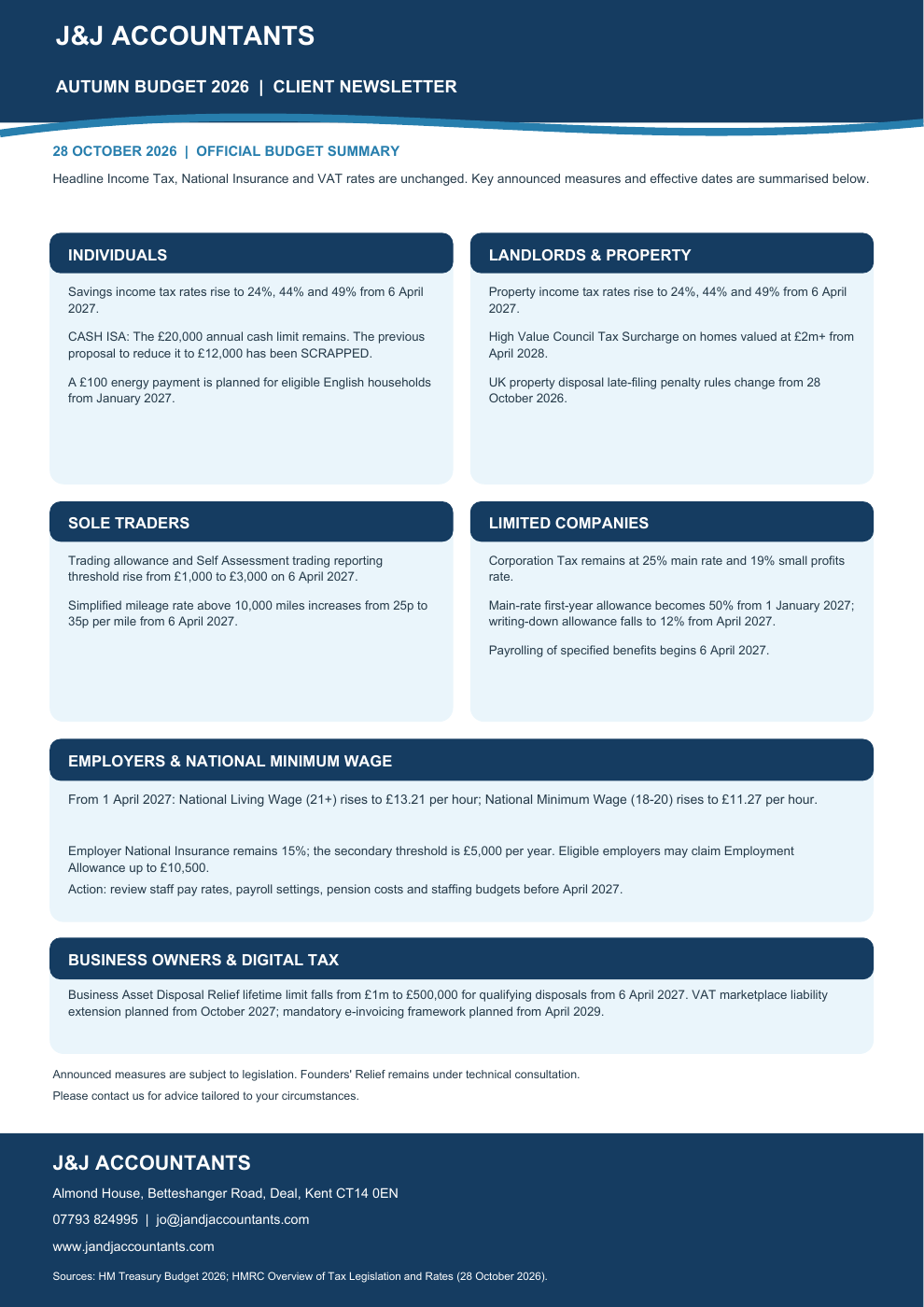
Official sources: HM Treasury Budget 2026 and HMRC’s overview of tax legislation and rates.
General guidance on the announcements of 28 October 2026, published 29 October 2026. This is not personal tax advice.